Bank of Japan disappointed the markets by not expanding its quantitative easing program in its most recent meeting.
The disappointment is exacerbated from positive signs contrary to its ultimate position leading up to the meeting.
The Nikkei index which is a key indicator of the overall Japanese equity markets like the Australia 200 Index fell 1000 points immediately after. Needless to say the Japanese equity market did not take the standing pat position the BOJ well and it has continued to be sold off after.
Nikkei Index Return
[visualizer id=”2009″]
Chart above shows the return of the Japanese equity markets verses other major market indices. The sentiment has gradually deteriorated as the yen gets stronger. On the other hand S&P 500 index returns has been the most resilient.
Japanese equities is still heavily export dependent. The value of the currency is a key factor in business profitability. The fall in the Nikkei since then mirrors the rise of the Japanese yen against the US dollar.
Nikkei 225 Index Chart
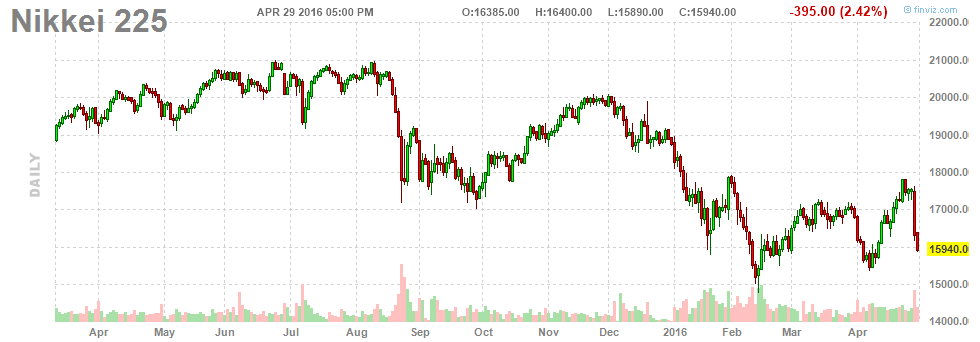
Chart above shows the price of Nikkei over the last 12 month. The index has been in the bear market since August 2015 when it peaked near 21,000.
Contrary to traditional expectations on impact of economic reforms. The yen has been rising against the dollar as the realization sink in that Abenomics is delivering the structural reforms it promised. This is because it was weakens as result of BOJ QE programs aimed at generating inflation. This did not work. The BOJ has done all it can supporting the short term growth in profit but the long term structural issues of Japan still exist and not even close to be addressed.
These issues include an aging demographic, limited corporate governance reforms for Japanese companies and labor market flexibility. These issues are the same headwinds facing Japan 10 years ago. While progress has been made, it is not enough to keep us interested in taking a deep dive in any names at this level.
Right now our view is that the index is in no man’s land where the risk of reversion of the equity index to levels pre Kuroda monetary expansion program is very real. If the Japanese market decline further from these levels we will then think about taking a position.