Kogan (ASX KGN) debuted on the ASX in early July. The first day of trading was under whelming to say the least where it lost more than 15% from the IPO price.
KGN raised $50 million with $15 million paid out to existing owners that are associated with Ruslan Kogan and David Shafer.
Quick take
We do not like to invest in consumer discretionary stocks simply because it is outside our circle of competence. In investing, it is just as much as what you know as what you don’t know.
Retail discretionary stocks like Kogan, JB Hi Fi and Harvey Norman are leveraged to the overall economy. Kogan has an eCommerce angle of large share of the Australian online retail market and taking share from traditional brick and mortar stores.
The under current is the fact that the well known brand on line electronics is notorious for low bargain power of retailers and a low margin business. Even with that said, it is difficult to get our head around retail outside of traditional super markets like Woolies and Coles.
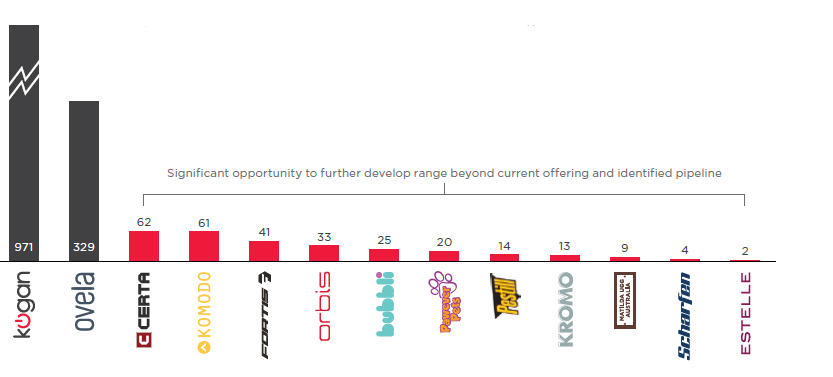
Kogan prviate label brands
Interesting outside of the primary kogan.com.au website. KGN includes a portfolio of private label websites in travel and other sub retail segments.
The business model looks like taking its existing eCommerce platform and scaling it with other verticals. Essentially it can be considered an internal retail incubator.
This potentially means it can be difficult in breaking out the actual profitability of the core business. Any profits Kogan makes on its primary website is funneled into developing the single vertical sites. This model can be similar to Amazon.
Amazon has been listed for over a decade and still shows limited profits. This is because it has been reinvesting its retail profits in Kindle, Amazon Prime and its crown jewel AWS.
Instead the management like to point to operating cashflow as an representation of the underlying cashflow. We think this will be the best indicator of the underlying performance of the business.
It will be interesting if Kogan will go similar direction and how much it will test Australian institutional investors patience.